Choosing a commercial painting contractor in Cincinnati is a decision that affects your property’s appearance, your tenants’ or customers’ experience, and your budget — for years. Unlike residential painting, commercial projects involve occupied spaces, strict schedules, specialized coatings, and coordination with property managers, tenants, and sometimes general contractors. The wrong choice can mean missed deadlines, disrupted operations, and a finish that doesn’t last.
Use this 10-point checklist to evaluate any commercial painting contractor you’re considering. These are the questions and criteria that separate true commercial specialists from painters who occasionally take on a commercial job. For a sense of what commercial projects typically cost, see our guide to commercial painting costs in Cincinnati.
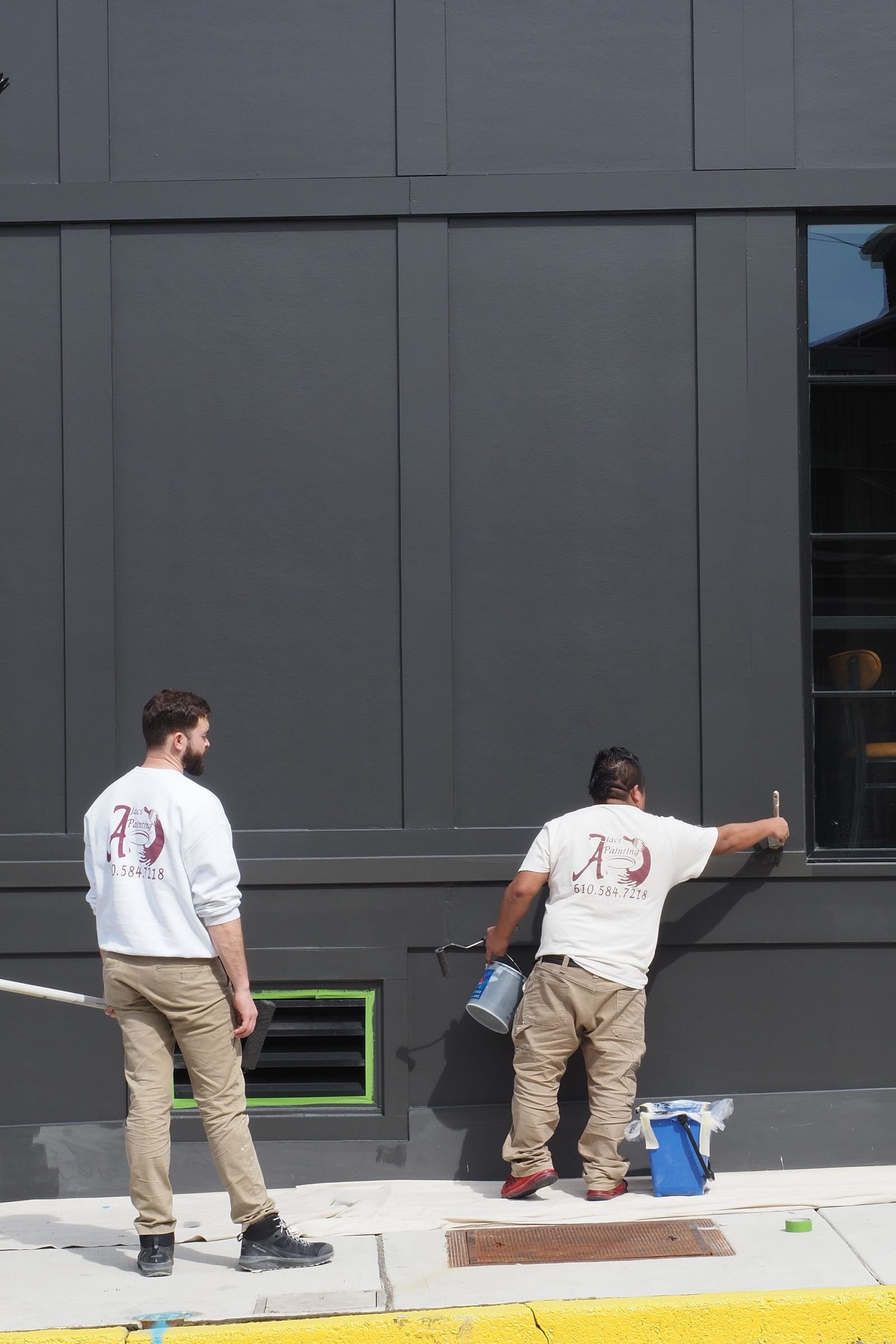
Why the Right Contractor Matters So Much
Commercial painting is a different trade from residential painting in ways that matter. Commercial projects are larger, often must be completed in occupied buildings, require after-hours or phased scheduling, and frequently involve specialty coatings — epoxies, elastomerics, dryfall, low-VOC systems for sensitive environments like medical offices and restaurants.
A contractor without genuine commercial experience may underbid the project (and cut corners to make it work), disrupt your operations, or specify the wrong products for your surfaces. The checklist below helps you find a contractor equipped for the realities of commercial work.
The 10-Point Checklist
1. Do they specialize in commercial painting — or mostly do houses?
Ask directly what percentage of their work is commercial. You want a contractor whose crews, equipment, scheduling systems, and product knowledge are built around commercial buildings: offices, retail, restaurants, warehouses, medical facilities, multi-family. A residential painter who “also does commercial” is a different proposition from a company that does commercial work every day.
2. Ask about licensing and insurance — and verify the answers
Ask every contractor you’re considering: Are you properly licensed for the work? Do you carry general liability insurance and workers’ compensation? Can you provide certificates of insurance naming your property or management company as certificate holder?
Don’t just take verbal assurances — request the documentation. Reputable commercial contractors expect these questions and provide proof readily. If a contractor hesitates, deflects, or can’t produce current certificates, that’s a serious red flag regardless of how competitive the price looks.
3. Insist on a detailed written quote — not a handshake number
Every bid should be in writing and should spell out: the full scope of work (which areas, which surfaces), surface preparation steps, the specific coating products to be used (manufacturer and product line, not just “premium paint”), the number of coats, the project timeline, the total price, and payment terms.
Vague quotes make comparison impossible. If one bid is dramatically lower than the others, the written scope will usually reveal why — less prep, fewer coats, cheaper products, or excluded areas. Compare scope first, price second.
4. Check that the scope matches your actual needs
A good contractor starts with a thorough walkthrough — measuring, photographing conditions, noting repairs needed, and asking about your operations and constraints. Be wary of quotes generated without a site visit, or walkthroughs that last five minutes.
The scope should address what you actually saw together: the peeling areas, the high-traffic zones, the scheduling constraints, the surfaces that need specialty products. A detailed scope is evidence of a careful assessment.
5. Ask how they’ll schedule around your operations
For most Cincinnati businesses, shutting down during painting isn’t an option. Ask: Can you work nights and weekends? How do you phase large projects so parts of the building stay operational? How do you handle dust, odors, and noise in occupied spaces?
The contractor should have clear, specific answers — not vague reassurances. After-hours and weekend work should be standard for commercial specialists, confirmed in writing as part of the proposal.
6. Ask for references — and actually check them
Request references from recent commercial projects similar to yours in type and size. Then call them. Ask: Did the crew show up when promised? Was the project completed on schedule? How was communication? Was the site kept clean? Would you hire them again?
A contractor with solid commercial experience will have property managers and business owners willing to vouch for them. Reluctance to provide references — or references that are all residential — tells you something.
7. Evaluate communication from the first contact
Pay attention to how the contractor communicates during the bidding process, because it predicts how they’ll communicate during the project. Do they return calls promptly? Do they show up for the walkthrough on time? Is the quote clear and professional? Do they answer questions directly?
Commercial projects involve ongoing coordination. You need a single point of contact who keeps you informed — not a crew that shows up unannounced or a project manager you can’t reach.
8. Ask about their surface preparation process
Prep is where commercial paint jobs succeed or fail, and it’s the easiest place for a contractor to cut corners. Ask specifically: What prep is included? How do you handle failing paint, drywall repairs, caulking, and masking? What do you do about protection for floors, furniture, and equipment?
The answer should be detailed and confident. “We prep everything properly” isn’t a process — power washing, scraping, sanding, priming, caulking, masking, and protection should all be named explicitly in the scope.
9. Ask what products they use — and why
Commercial buildings need commercial-grade coatings: scrubbable finishes for high-traffic interiors, low-VOC products for occupied spaces, moisture-resistant systems for restaurants and medical facilities, durable acrylics or elastomerics for exteriors, epoxies for industrial floors.
Ask which manufacturers and product lines they specify and why those products fit your building. A knowledgeable contractor explains the reasoning; one who can’t name products or defaults to whatever’s cheapest at the paint store is a concern.
10. Ask about their process if something goes wrong
Ask: What happens if I’m not satisfied with an area? How do you handle touch-ups after completion? What are your payment terms, and is final payment tied to a walkthrough sign-off?
Clear answers — a final walkthrough, a punch-list process, reasonable payment terms tied to progress — signal a professional operation. Evasive answers, demands for large upfront payments, or no defined completion process are warning signs.
Red Flags That Should Stop the Conversation
- No proof of insurance, or reluctance to provide certificates
- Quotes without a site visit, or dramatically lower than every other bid
- No commercial references, or references you can’t verify
- Vague scope — no named products, no prep details, no timeline
- Pressure to sign immediately or pay a large deposit upfront
- No clear plan for working around your operations
- Poor communication during the bidding process itself
Making Your Decision
The best commercial painting contractor for your Cincinnati property isn’t necessarily the cheapest — it’s the one whose scope is most thorough, whose communication is most professional, whose references check out, and whose plan for your building makes the most sense. Use this checklist with every bidder, compare the written scopes carefully, and trust what the process tells you.
If you’re evaluating contractors now, we’d welcome the chance to earn your business. Call (513) 930-0169 for a free walkthrough and detailed written proposal — or request your estimate online. We’ll show up on time, document everything, and give you one clear price.
Leave a Reply